
JOJasmin OsmanagićKompozitor · pijanista · muzički pedagog
||
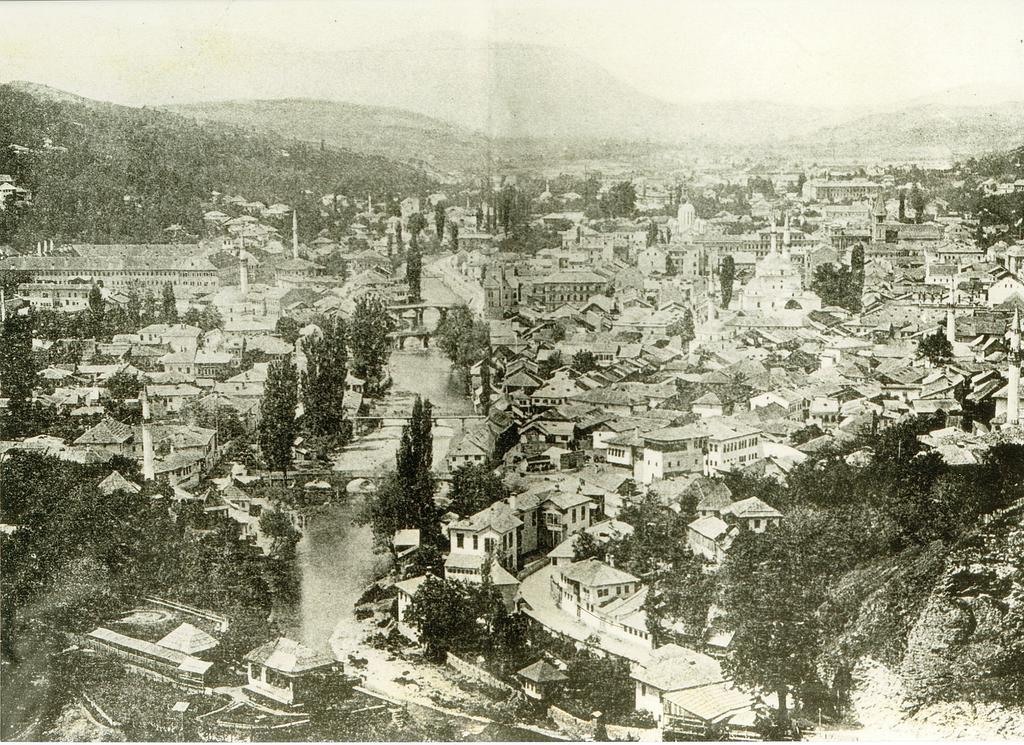
Historijska panorama SarajevaVučko, simbol Zimskih olimpijskih igara Sarajevo 1984.

Magistarski umjetnički rad · Sarajevo · 2007

Simfonija Sarajevo

Grad kao sjećanje, zvuk i unutrašnji pejzaž

Simfonija Sarajevo nastala je kao moj stvaralački magistarski rad, koji sam 2007. godine odbranio na Muzičkoj akademiji u Sarajevu sa najvišom ocjenom — 10.

Mentor, stručni saradnik i profesor bio je Josip Magdić, čovjek kojem sam zahvalan za znanje koje i danas koristim. Od početka studija predavao mi je kompoziciju, orkestraciju, modernu notaciju i druge stručne predmete. Pored ustaljenih metoda, vodio me je i kroz oblikovanje modernog elektroakustičkog svijeta.

Ponosan sam što sam imao čast biti njegov student, a kasnije — kako me je i sam nazivao — kolega. Stručnu komisiju činili su izuzetni profesori Anđelka Bego-Šimunić i Ivan Čavlović, od kojih sam također tokom studija sticao dragocjeno znanje. Nažalost, sva tri velika imena danas su pokojna, ali njihov trag ostaje živ u mom radu.

IV → III + ALMA

Simfonija je prvobitno koncipirana kao četverostavačno djelo. Tokom komponovanja paralelno sam razvijao i operu ALMA, pa sam jedan stav Simfonije — zbog istog stilskog jezika i srodnog karaktera — preoblikovao u Uvertiru opere ALMA. Tako Simfonija danas živi u tri stava, dok njen četvrti stav nastavlja život na opernoj sceni.

Riječ prije zvuka

Esej o Simfoniji Sarajevo

Lični zapis o gradu, djetinjstvu, sjećanju i motivima koji su ušli u muziku.

Otvori esej

Esej o Simfoniji Sarajevo

Tmurni oblaci, puni bezbrojnih nijansi crno-bijelih sjena, spuštaju se do podnožja jednog dugogodišnjeg sna koji mi se čini stvarnim i vraća me u djetinjstvo. U njima se smjenjuju ljepota, zaigranost i melanholija. Ponekad propuštaju snopove sunca, a istovremeno raspršuju tugu koja me već dugo prati i vraća pitanjima: ko sam, šta sam, gdje sam, s kim sam i zašto?

Često se pitam zašto sam ovdje dolje, a ne tamo gore. Gore je šuma u kojoj sam pravio luk i strijelu, padina na kojoj su sanke i skije postajale dio tijela, Benbaša koja se može pretvoriti u divlju rijeku, moja mahala, drugovi, Bijela bašča, Trebević, Jahorina, Bjelašnica i Baščaršija. Tamo gore je Sarajevo — sve ono što nosim u sebi.

Dok misli lutaju, san se stapa sa stvarnošću. Iza oblaka pojavljuju se dim ćevabdžinica, glas ezana sa munare i zvona katedrale i crkava. Ti zvukovi ne poništavaju jedni druge; oni zajedno stvaraju sliku grada čiju je kulturnu dinamiku teško opisati riječima. To je Sarajevo koje je nadahnulo mnoge umjetnike, a meni je postalo nepresušan izvor muzičkih ideja.

Prvobitni naziv simfonije bio je „Kazandžiluk“. Ta ulica, puna udaraca čekića, metalnog sjaja, šala i ritma, činila mi se kao prirodni početak djela. Iz nje su se širile slike mog nestašnog djetinjstva: prolazak prema Benbaši, kupovina šampita u slastičarni „Tip Top“, smijeh i dječija takmičenja koja danas izgledaju gotovo nestvarno.

Iz tog ritmičkog svijeta nastaje prvo tematsko jezgro. Nakon živog, gotovo plesnog A-tema, B-tema se pojavljuje kao smirena i široka melodijska misao. Kao da preko mosta ulazi u svijest mog „djeteta“ — same Simfonije — i otvara prostor za sjećanje.

Benbaša je bila mjesto slobode i iskušenja. Gledali smo starije dječake kako skaču pored brane sa stijena i tzv. kuće, učili plivati, prelazili na drugu obalu i vraćali se kući puni ogrebotina, ponosa i tajni. Zatim je dolazila Kozija ćuprija, Zelena vir i voda koja je istovremeno privlačila i plašila.

U sjećanje ulazi i pas lutalica kojeg smo kao djeca spasili. Bio je vjeran, tih i zahvalan. Kada su ga jednog dana odveli, osjetio sam prvi put onu vrstu nepravde koja se ne zaboravlja. I ta je slika, kao i mnoge druge, našla svoje mjesto u muzici — ne kao doslovna priča, nego kao boja i unutrašnja napetost.

Kovači su drugi veliki prostor mog djetinjstva: uske ulice, miris zemlje, smiraj dana, prva prijateljstva i prve ljubavi. U drugom stavu tema „Kad ja pođoh na Bembašu“ pojavljuje se kroz ritmičke varijacije. Ne koristim je kao folklorni ukras, nego kao duboko lični znak, melodiju koja u sebi nosi cijeli grad.

Treći stav vodi prema Trebeviću i februaru 1984. Sanke, skije, improvizovane staze, brzina i opasnost ulaze u scherzo. Zimske olimpijske igre bile su za nas praznik grada, trenutak kada se činilo da Sarajevo diše kao jedan veliki organizam. Pokret, energija i oštri ritmički rezovi tog vremena postali su građa muzike.

U završnim odjeljcima vraćam se staroj pjesmi koju mi je pjevala nena. Njeni motivi prolaze kroz sve stavove i povezuju ih. Pored nje, u djelu se pojavljuju slike kulturno-umjetničkih društava, baleta, narodnih igara i djevojke koja iz folklora prelazi u svijet klasičnog plesa. Taj susret nije sukob, nego pokušaj da se dva svijeta prepoznaju i obogate.

Simfonija Sarajevo nije turistički portret grada. Ona je lična karta sjećanja: Benbaša, Baščaršija, Kazandžiluk, Kovači, Trebević, dječija igra, prva ljubav, ezan, zvona, dim, snijeg i ritam. Sve se to stapa u jednu priču o gradu koji je istovremeno stvaran i unutrašnji, izgubljen i trajno prisutan.

Autor: Jasmin Osmanagić

Essay zur Symphonie Sarajevo

Düstere Wolken, erfüllt von unzähligen Schattierungen zwischen Schwarz und Weiß, senken sich bis an den Fuß eines lang gehegten Traums, der mir wirklich erscheint und mich in meine Kindheit zurückführt. In ihnen wechseln sich Schönheit, Verspieltheit und Melancholie ab. Manchmal lassen sie Sonnenstrahlen hindurch und zerstreuen zugleich die Traurigkeit, die mich seit Langem begleitet, während sie mich immer wieder zu den Fragen zurückführen: Wer bin ich, was bin ich, wo bin ich, mit wem bin ich und warum?

Oft frage ich mich, warum ich hier unten bin und nicht dort oben. Dort oben ist der Wald, in dem ich Pfeil und Bogen baute, der Hang, auf dem Schlitten und Skier zu einem Teil meines Körpers wurden, die Benbaša, die sich in einen wilden Fluss verwandeln konnte, meine Mahala, meine Freunde, Bijela bašča, Trebević, Jahorina, Bjelašnica und Baščaršija. Dort oben ist Sarajevo — all das, was ich in mir trage.

Während die Gedanken schweifen, verschmilzt der Traum mit der Wirklichkeit. Hinter den Wolken erscheinen der Rauch der Ćevapi-Grills, der Ruf des Muezzins vom Minarett und die Glocken der Kathedrale und der Kirchen. Diese Klänge heben einander nicht auf; gemeinsam zeichnen sie das Bild einer Stadt, deren kulturelle Dynamik sich nur schwer in Worte fassen lässt. Dieses Sarajevo hat viele Künstler inspiriert und wurde für mich zu einer unerschöpflichen Quelle musikalischer Ideen.

Der ursprüngliche Titel der Symphonie lautete „Kazandžiluk“. Diese Gasse, erfüllt von Hammerschlägen, metallischem Glanz, Scherzen und Rhythmus, erschien mir als natürlicher Ausgangspunkt des Werkes. Aus ihr entstanden Bilder meiner ungestümen Kindheit: der Weg zur Benbaša, der Kauf von Šampita in der Konditorei „Tip Top“, Lachen und kindliche Wettspiele, die heute beinahe unwirklich erscheinen.

Aus dieser rhythmischen Welt entsteht der erste thematische Kern. Nach dem lebhaften, beinahe tänzerischen A-Thema erscheint das B-Thema als ruhiger, weit gespannter melodischer Gedanke. Es ist, als überschreite es eine Brücke und trete in das Bewusstsein meines „Kindes“ — der Symphonie selbst — ein, um einen Raum für Erinnerung zu öffnen.

Die Benbaša war ein Ort der Freiheit und der Bewährungsproben. Wir sahen den älteren Jungen zu, wie sie neben dem Wehr von den Felsen und von der sogenannten „Kuća“ sprangen, lernten schwimmen, gelangten ans andere Ufer und kehrten voller Schrammen, Stolz und Geheimnisse nach Hause zurück. Danach kamen die Ziegenbrücke, Zeleni vir und das Wasser, das uns zugleich anzog und ängstigte.

In meine Erinnerung tritt auch ein streunender Hund, den wir als Kinder gerettet hatten. Er war treu, still und dankbar. Als man ihn eines Tages fortbrachte, empfand ich zum ersten Mal jene Art von Ungerechtigkeit, die man nie vergisst. Auch dieses Bild fand, wie viele andere, seinen Platz in der Musik — nicht als wörtlich erzählte Geschichte, sondern als Klangfarbe und innere Spannung.

Kovači bildet einen weiteren großen Raum meiner Kindheit: enge Gassen, der Geruch der Erde, die Ruhe des Abends, erste Freundschaften und erste Lieben. Im zweiten Satz erscheint das Lied „Kad ja pođoh na Bembašu“ in rhythmischen Variationen. Ich verwende es nicht als folkloristischen Schmuck, sondern als zutiefst persönliches Zeichen — als Melodie, die eine ganze Stadt in sich trägt.

Der dritte Satz führt zum Trebević und in den Februar 1984. Schlitten, Skier, improvisierte Pisten, Geschwindigkeit und Gefahr finden Eingang in das Scherzo. Die Olympischen Winterspiele waren für uns ein Fest der Stadt, ein Augenblick, in dem Sarajevo wie ein einziger großer Organismus zu atmen schien. Bewegung, Energie und die scharfen rhythmischen Kontraste jener Zeit wurden zum musikalischen Material.

In den abschließenden Abschnitten kehre ich zu einem alten Lied zurück, das mir meine Großmutter vorsang. Seine Motive ziehen sich durch alle Sätze und verbinden sie miteinander. Daneben erscheinen im Werk Bilder von Kultur- und Kunstvereinen, Ballett, Volkstänzen und eines Mädchens, das aus der Folklore in die Welt des klassischen Tanzes übertritt. Diese Begegnung ist kein Konflikt, sondern der Versuch, zwei Welten einander erkennen und gegenseitig bereichern zu lassen.

Die Symphonie Sarajevo ist kein touristisches Porträt der Stadt. Sie ist eine persönliche Landkarte der Erinnerung: Benbaša, Baščaršija, Kazandžiluk, Kovači, Trebević, Kinderspiele, die erste Liebe, der Gebetsruf, Glocken, Rauch, Schnee und Rhythmus. All dies verschmilzt zu einer Geschichte über eine Stadt, die zugleich wirklich und innerlich, verloren und doch dauerhaft gegenwärtig ist.

Autor: Jasmin Osmanagić

Essay on Sarajevo Symphony

Dark clouds, carrying countless shades of black and white, descend toward the foot of a long-standing dream that feels real and returns me to childhood. Beauty, playfulness and melancholy alternate within them. At moments they let shafts of sunlight through, while at the same time dispersing the sadness that has followed me for years and bringing me back to the questions: who am I, what am I, where am I, with whom, and why?

I often ask myself why I am down here and not up there. Up there are the forest where I made bows and arrows, the hill where sledges and skis became part of my body, Benbaša turning into a wild river, my mahala, my friends, Bijela bašča, Trebević, Jahorina, Bjelašnica and Baščaršija. Up there is Sarajevo — everything I carry within me.

As my thoughts wander, dream and reality merge. Behind the clouds appear the smoke of ćevapi grills, the call to prayer from the minaret, and the bells of the cathedral and churches. These sounds do not cancel one another; together they form the image of a city whose cultural vitality is difficult to describe in words. This is the Sarajevo that inspired many artists and became for me an inexhaustible source of musical ideas.

The symphony’s original title was “Kazandžiluk”. That street, filled with hammer blows, the gleam of metal, jokes and rhythm, seemed to me the natural beginning of the work. From it emerged images of my unruly childhood: the walk toward Benbaša, buying cream cakes at the “Tip Top” pastry shop, laughter and children’s games that today seem almost unreal.

From this rhythmic world grows the first thematic core. After the lively, almost dance-like A theme, the B theme appears as a calm and broad melodic thought. It is as though it crosses a bridge into the consciousness of my “child” — the Symphony itself — and opens a space for memory.

Benbaša was a place of freedom and trial. We watched older boys jump from the rocks beside the dam and from the so-called “house”, learned to swim, crossed to the other bank and returned home full of scratches, pride and secrets. Then came the Goat’s Bridge, Zeleni vir and water that attracted and frightened us at the same time.

A stray dog we rescued as children also enters the memory. He was loyal, quiet and grateful. When he was taken away one day, I felt for the first time a kind of injustice that cannot be forgotten. That image, like many others, found its place in the music — not as a literal story, but as colour and inner tension.

Kovači forms another major landscape of my childhood: narrow streets, the smell of earth, evening calm, first friendships and first loves. In the second movement, the song “Kad ja pođoh na Bembašu” appears through rhythmic variations. I do not use it as folkloric decoration, but as a deeply personal sign, a melody that contains an entire city.

The third movement leads toward Trebević and February 1984. Sledges, skis, improvised tracks, speed and danger enter the scherzo. The Winter Olympic Games were a celebration of the city, a moment when Sarajevo seemed to breathe as one great organism. The movement, energy and sharp rhythmic contrasts of that time became musical material.

In the closing sections I return to an old song sung to me by my grandmother. Its motifs pass through all the movements and connect them. Alongside it appear images of cultural societies, ballet, folk dances and a girl who moves from folklore into the world of classical dance. The encounter is not a conflict, but an attempt for two worlds to recognise and enrich one another.

Sarajevo Symphony is not a tourist portrait of the city. It is a personal map of memory: Benbaša, Baščaršija, Kazandžiluk, Kovači, Trebević, childhood games, first love, the call to prayer, bells, smoke, snow and rhythm. All of this merges into a story of a city that is at once real and inward, lost and permanently present.

Author: Jasmin Osmanagić

Tri stava · tri lica grada

Poslušajte Simfoniju Sarajevo

I

Prvi stav

Kovači

Stari grad
II

Drugi stav

Kazandžiluk

Baščaršija
III

Treći stav

Februar 1984.

Olimpijada
Nastavite skrolatiKompolize ljeto 2014 · BerlinSkrolanjem nastavljate kroz portfolio istim redoslijedom kao u meniju.